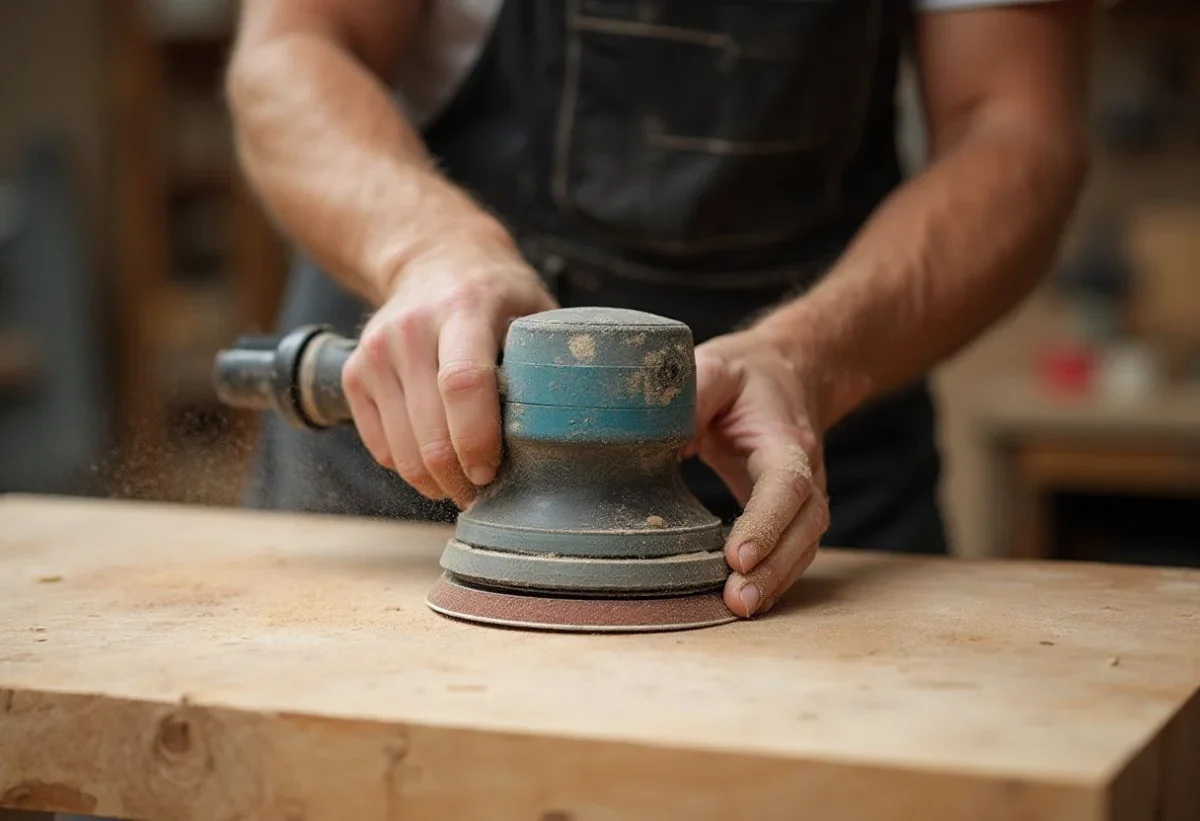
In the world of artisanal and industrial manufacturing, the abrasive belt stands out as an essential tool, blending tradition and innovation. Often underestimated, it is at the heart of many finishing, sanding, and polishing processes. Whether you are a carpenter, metallurgist, or simply a DIY enthusiast, the knowledge and proper use of this tool can transform a simple project into a work of art. Through this journey, we will discover the subtleties that make abrasive belts so essential, from their manufacturing to their multiple applications.
Understanding the Composition of Abrasive Belts
The complexity of an abrasive belt lies in its composition, which determines its durability and effectiveness. Understanding these elements is fundamental to choosing the right tool for each specific task.
Abrasive belts are essentially made up of three main components: the abrasive material, the backing, and the adhesive that binds them. The abrasive material, often aluminum oxide or silicon carbide grains, is chosen based on the material to be worked on. The backing can be made of paper, fabric, or a complex composite, each offering varying levels of flexibility and resistance. Finally, the adhesive, generally a resin, ensures the cohesion of the whole.
Diverse Applications of Abrasive Belts
The use of abrasive belts extends far beyond simple sanding, covering a wide range of applications across different industries.
- Woodworking: wood artisans use abrasive belts to smooth surfaces, prepare wood for finishing, or even to carve delicate shapes.
- Metallurgy: in the metal field, they are essential for polishing, deburring, and providing precise finishes to metal parts.
- Automotive: in the automotive industry, they are used to prepare surfaces before painting, ensuring a flawless finish.
- Ceramics: used for polishing and perfecting surfaces, they ensure a smooth and uniform finish for ceramic objects.
Choosing the Right Abrasive Belt for Each Project
Choosing an abrasive belt may seem trivial, but it is crucial to match the grit, size, and material to each specific application to optimize results.
- Grit: coarse grits remove material more quickly, while fine grits are used for finishing.
- Size: the size of the belt should be adapted to the machine or tool used, allowing for efficient and safe use.
- Material: choose between materials like silicon carbide or aluminum oxide based on the type of work and the surface to be treated.
Maintenance and Durability of Abrasive Belts
Although they are robust, abrasive belts require proper maintenance to extend their lifespan and maintain optimal performance.
Proper storage, away from moisture and extreme temperatures, is essential to avoid degradation of the backing and adhesive. Regularly cleaning the belts to remove accumulated residues helps prolong their effectiveness. Finally, regularly inspecting for any wear or damage ensures safe and efficient operation.
The abrasive belt is not just a tool, but a link between the artisan and their material. Mastering it opens the doors to impeccable finishes and the realization of complex projects. Whether for woodworking, metalworking, or in more specific applications, choosing and using an abrasive belt correctly transforms the creation process, offering unmatched precision and quality.