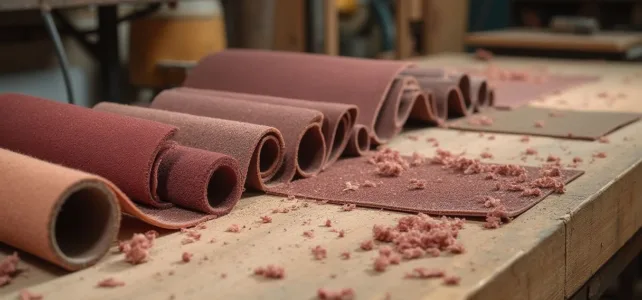
Mastering the art of finishing, whether it involves metal, wood, or any other surface, requires a deep understanding of the essential tool known as the abrasive. This term, often unfamiliar to the general public, refers to a wide range of materials used for polishing, smoothing, or abrading. From its composition to its various applications, the abrasive is a crucial element in many industrial and artisanal fields, where it plays a determining role in the quality of the finished product. The implications of its use are vast and versatile, and a thorough knowledge of its characteristics can greatly influence the outcomes of any finishing project.
Types of Abrasives: A Range of Possibilities
The diversity of abrasives available on the market reflects the multiplicity of their applications. Each is designed to meet specific needs.
- Natural and synthetic: natural abrasives, such as corundum or diamond, have exceptional hardness, while synthetic abrasives, like silicon carbide, are manufactured to provide optimal consistency and performance.
- Shapes and formats: abrasives come in the form of papers, discs, belts, and blocks. Each format has a well-defined application, whether for manual sanding or mechanical sanding.
- The grits: the importance of choosing the grit of an abrasive cannot be underestimated. Coarse grits are used for quickly removing material, while fine grits are ideal for smooth and detailed finishes.
Industrial and Artisanal Applications
The role of abrasives in industrial and artisanal sectors is fundamental, covering a wide range of tasks from roughing to finishing.
In the metallurgical industry, abrasives play a key role in shaping and polishing metal surfaces. They are also essential in the woodworking sector, where they help transform raw pieces into refined works of art. The automotive industry cannot do without these tools for preparing bodies before painting. In jewelry making, the finest abrasives reveal the full brilliance of precious metals and gemstones. In each case, the choice of the appropriate abrasive determines the quality of the work performed, highlighting its strategic importance.
Technological Innovations in the Abrasive Field
The technological development of abrasives has brought about a silent revolution in the field of polishing and finishing.
- Nanotechnology: abrasives incorporating nanotechnology offer unprecedented precision, allowing for perfect finishes even on delicate materials.
- Durability: with growing environmental concerns, innovations have led to the creation of more sustainable abrasives, reducing waste while providing enhanced performance.
- Customization: new technologies allow for the creation of custom abrasives, specifically tailored to the needs of different industrial sectors.
- Digital applications: the integration of digital technologies is revolutionizing the use of abrasives, making it possible to use them in high-precision automated processes.
Tips for Optimal Use of Abrasives
To achieve the best possible results from an abrasive, certain tips and best practices should be known.
Choosing the right grit for the task at hand is essential. Additionally, controlling the pressure applied during use is crucial; too much pressure can damage the surface, while insufficient pressure can unnecessarily prolong the work. It is also relevant to consider the speed and direction of movements to avoid premature wear of the abrasives. Finally, regular maintenance of sanding equipment extends the lifespan of abrasives, ensuring optimal long-term performance. These practical tips are the result of extensive experience and a deep understanding of finishing processes.
The use of abrasives is a complete art, combining science and craftsmanship to transform and enhance materials. Their importance in industrial and artisanal processes cannot be underestimated, as they significantly influence the quality and appearance of finished products. With technological advancements, the world of abrasives continues to evolve, offering ever more possibilities and innovations to meet the growing demands of the modern world.