
Finding an organic producer near you on a specialist website should take less than a minute. In practice, browsing gets complicated as soon as you need to cross-reference two separate details: geographic proximity and organic certification. These criteria follow different logic, and most platforms either mix them together or fail to distinguish them clearly. Understanding how a sitemap organizes this information can save time and prevent misinterpretation.
Organic certification and local origin: two filters not to confuse on an organic products website
The AB and EU organic logos confirm compliance with organic production rules, but they do not guarantee local origin. An organically certified market gardener may ship vegetables hundreds of miles away, while a producer in the neighboring village may be in conversion and not yet certified.
This distinction has a direct impact on navigation. A useful sitemap separates filtering by certification from filtering by location. When these two options are combined in a single menu, visitors can no longer tell whether the results shown are certified products, local products, or both.
| Criterion | What it guarantees | What it does not guarantee |
|---|---|---|
| AB / EU organic label | Compliance with organic specifications (production, processing) | Geographic proximity of the producer |
| “Local” designation or geolocation | Location within a defined area | Organic certification of the products |
| Agence Bio directory listing | Official status of the operator (certified, in conversion) | Actual product availability or direct sales |
For example, by consulting the Le Bio du Coin sitemap, you can see how product categories are separated from information about producers, making it easier to distinguish the available selection from the supplier’s status.
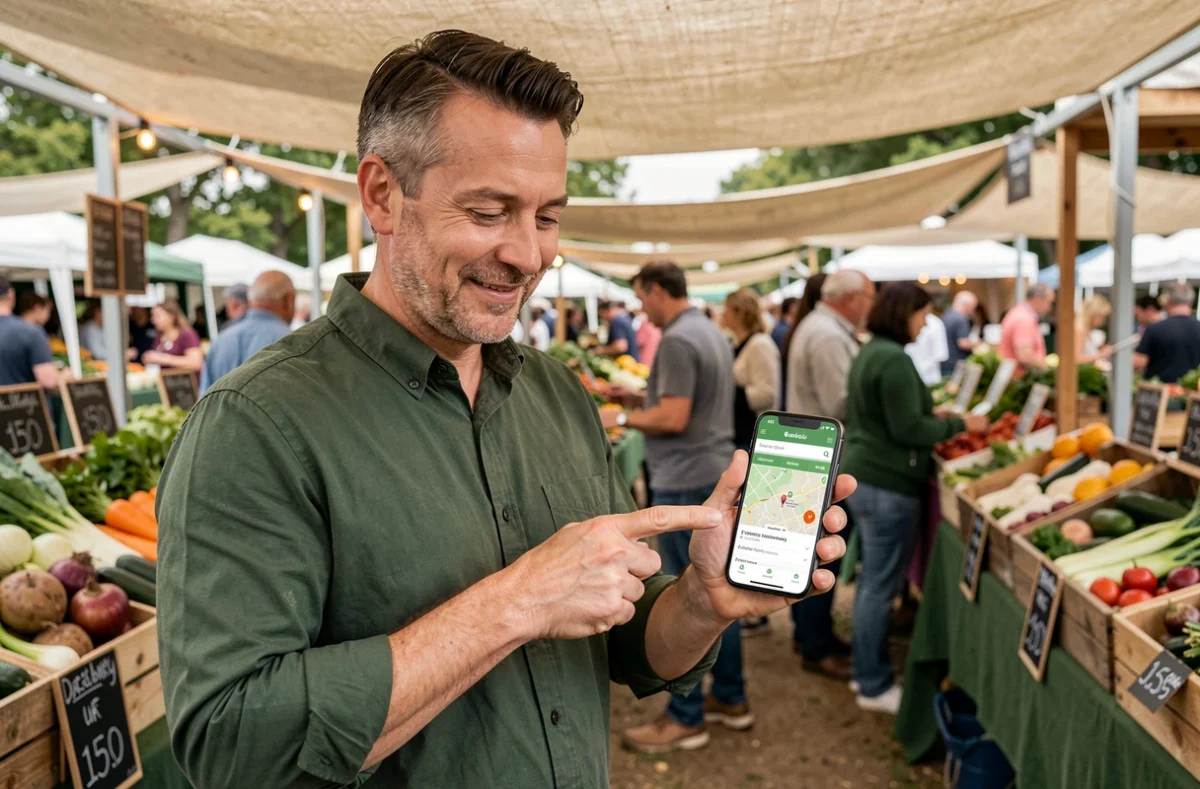
Local organic sitemap: check the update date and pending information
A collaborative map or organic producer directory may have a validation delay before publication. On some platforms, a new or edited entry first appears grayed out, pending a voting system or moderation before it is confirmed. This process helps protect data reliability, but it also means that a visible listing is not necessarily verified.
A recent commitment to organic farming does not necessarily mean that products are already certified. The Agence Bio directory distinguishes between activities and production status: a conversion period may apply before certification takes effect. Visitors who do not check this detail on the listing risk thinking they are buying a certified product when it is still in transition.
To find your way around, look for these three details as soon as you land on a website:
- The date the listing or map was last updated, which indicates whether the information reflects the current situation or one from several months ago
- The validation status of each entry (verified, awaiting moderation, flagged as outdated), often indicated by a color code or icon
- A way to report missing or incorrect information, such as a report button or contact form, which shows that the site is actively maintained
Map or list search: which browsing method should you use to find an organic producer?
The official Agence Bio directory and collaborative local maps serve different needs. The former lists operators by their activities and organic status. The latter are designed to help users discover producers in a given area, often through a map interface such as OpenStreetMap.
Searching for nearby producers and verifying certification require two separate steps. Finding a vegetable producer within twelve miles is a geographic search. Checking that the producer is actually certified organic (and not just in conversion) is an administrative search. The best-designed websites connect these two steps in their structure rather than layering them on top of each other.
In practice, map-based browsing is useful when visitors are exploring an area without a specific destination in mind. A filtered list is more effective when they are looking for a particular product (organic goat’s cheese, for example) and want to compare several producers.
| Browsing method | Best suited to | Main limitation |
|---|---|---|
| Interactive map | Geographic exploration, discovering nearby producers | Difficulty filtering by product type or certification status |
| Filtered list | Targeted product searches, comparing producers | Loss of spatial context, less intuitive for judging distance |
| Sitemap | Overview of the site structure, direct access to a category | No visual or geographic dimension |
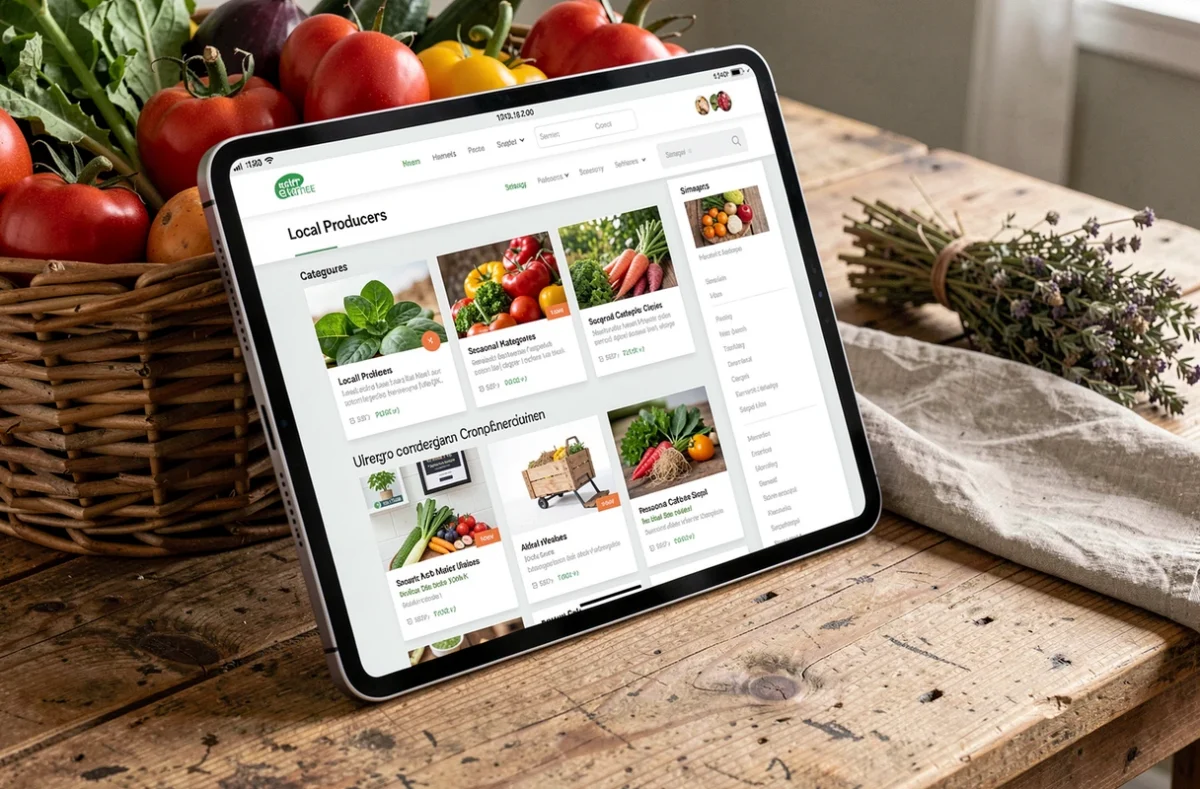
Local organic website structure: sections that save time
An effective sitemap for local organic products clearly separates three types of content: the product catalog, the producer directory, and certification information. When these three pillars are mixed together in a flat site structure, every search requires visitors to mentally sort through unrelated results.
Product categories are best organized by use (fruit and vegetables, dairy, meat, groceries) rather than alphabetically. Alphabetical order scatters results and requires visitors to know the exact name of what they are looking for.
For producer listings, the most useful information is often the least visible: the delivery or direct-sales area. A producer listed in a neighboring county is only relevant if their products are accessible, whether at a market, a collection point, or by delivery.
Local maps can be dynamic and incomplete. Well-designed navigation makes this clear instead of hiding it. Showing the total number of listings, the percentage updated in the last six months, or the date of the most recent addition gives visitors an accurate idea of the site’s coverage.
Ultimately, a sitemap’s quality can be measured with a simple test: can a visitor unfamiliar with the platform find a certified producer within three clicks who is geographically accessible and whose listing was recently verified? Websites that fail this test often accumulate sections without prioritizing access to these three essential details.