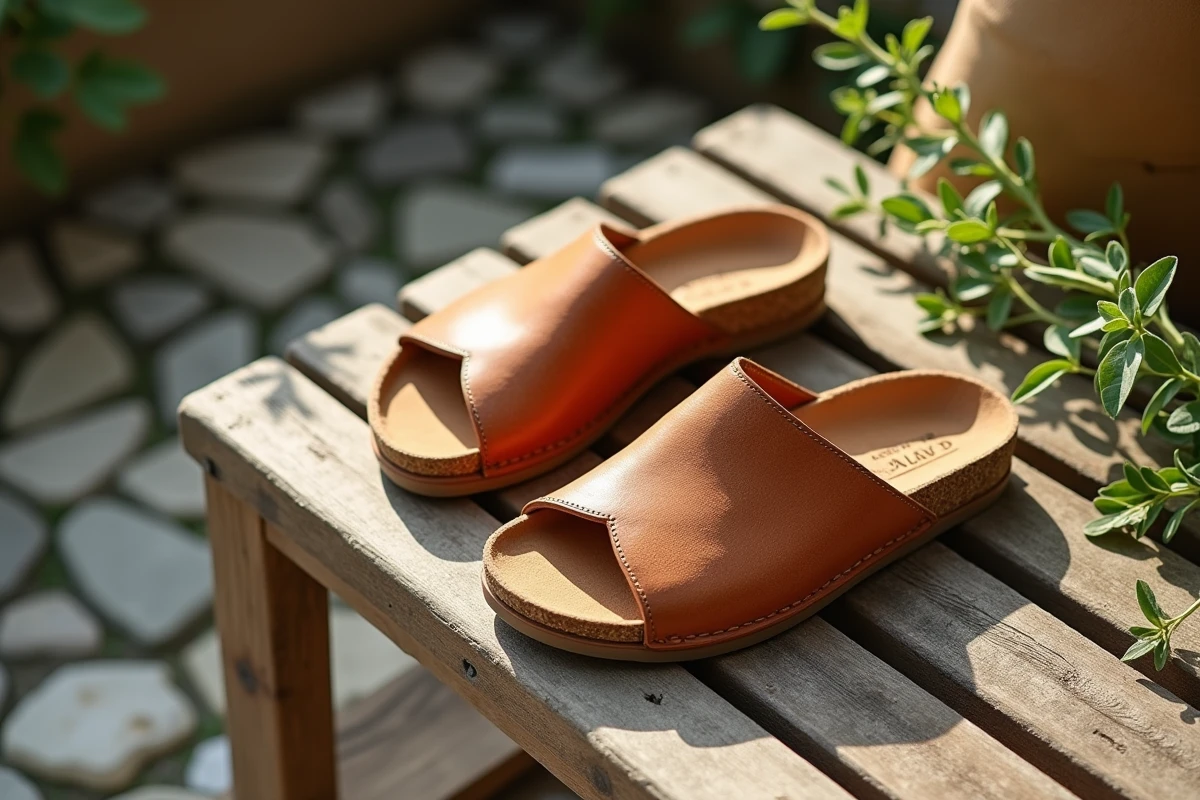
The molded cork footbed of Birkenstock is based on precise craftsmanship, but it does not have a monopoly on the anatomical footbed. Several European manufacturers offer comparable, or even superior constructions based on podiatric certification criteria, material traceability, or regulatory compliance. We review the technical parameters that separate a true comfort shoe from a mere aesthetic clone.
Podiatric certification and anatomical footbed: what distinguishes a comfort shoe from a dupe
Birkenstock communicates about its footbed made of cork and natural latex, but the brand does not claim certification issued by a podiatric association. Since 2024, manufacturers like Finn Comfort, Fidelio, or Mephisto have highlighted soles certified by national podiatric associations, notably the Bundesverband der Podologen in Germany.
This distinction changes the game for wearers suffering from foot pathologies (hallux valgus, plantar fasciitis). A low-cost dupe reproduces the outer shape of the Arizona or Boston sandal, but not the progressive density of cork or the curvature of arch support. We recommend checking if the manufacturer publishes data on the Shore hardness of its sole and the heel-to-toe drop.
Looking for an alternative to Birkenstock therefore involves looking beyond price and style to inquire about the internal structure of the shoe.

Adhesives, solvents, and REACH regulation: the impact on the durability of comfort sandals
The regulation (EU) 2023/2055 on microplastics and the REACH updates have tightened the rules on adhesives and solvents used in shoe manufacturing since 2023. Several comfort sandal brands have had to modify their bonding processes to comply.
El Naturalista, Camper, and Think! have communicated about this change. The shift to water-based adhesives directly affects reparability: a re-glued sole with a solvent-free adhesive does not react the same way to thermal debonding used by a traditional cobbler. For the consumer, this means that a sandal compliant with the new regulatory framework may be more difficult to resole artisanally.
The dupes sold on marketplaces almost never mention their REACH compliance. A European manufacturer subject to this regulation offers a guarantee of chemical traceability absent from low-cost copies.
Eco-friendly comfort sandals: recycled cork, bio-sourced EVA, and life cycle analysis
The segment of sandals made from bio-sourced materials has significantly progressed since 2023. Brands like Baabuk, NAE, or Jonap communicate about the life cycle analysis of their models, a level of transparency that the majority of Birkenstock dupes do not offer.
Materials to watch out for:
- Recycled cork, sourced from collected corks, offers mechanical properties similar to virgin cork with a reduced extractive impact.
- Bio-sourced EVA, made from sugarcane, is gradually replacing petrochemical EVA in mid-soles.
- Certified natural rubber (FSC or equivalent) ensures a rubber production chain without associated deforestation.
We observe that brands positioned in this niche have prices comparable to those of Birkenstock, sometimes slightly higher. The difference lies in the documentation: a product sheet detailing the percentage of bio-sourced material and the origin of the cork inspires more trust than a simple “eco-friendly” label without verifiable data.
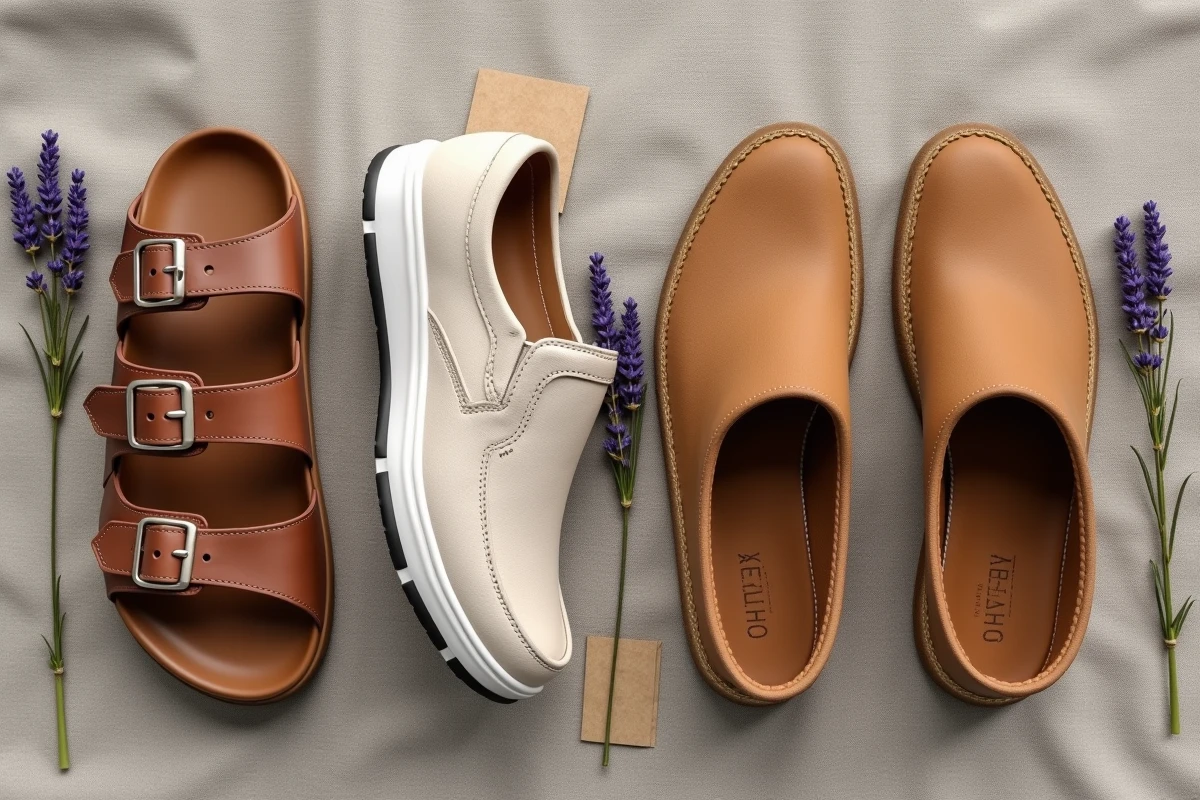
Mules and leather sandals: selection criteria for daily urban use
Full-grain vegetable-tanned leather remains the best compromise between breathability and longevity for an open shoe worn in an urban environment. Alternatives made from chrome-tanned leather, which are cheaper, age faster and do not handle prolonged moisture from sweating well.
Three technical criteria separate a durable mule from a disposable model:
- The thickness of the leather strap: below one millimeter, deformation occurs within a few weeks of daily wear.
- The strap-sole attachment: a saddle stitch holds better than simple gluing, especially on two-strap models like Arizona.
- The outsole: natural rubber or TPU offers better grip on wet surfaces than standard EVA, a point often overlooked on entry-level comfort models.
Mephisto, for example, uses a sole welding process called “Soft-Air” that incorporates an air cushion in the heel. Finn Comfort relies on an interchangeable removable footbed, compatible with custom orthotics. These construction details justify a price difference compared to fast fashion sandals.
Perspiration and insole: an underestimated point
Excessive foot perspiration quickly degrades a synthetic insole. Insoles made from natural cork or vegetable leather absorb moisture and dry between uses. A removable insole facilitates drying and extends the lifespan of the shoe by several seasons.
Birkenstock models incorporate a suede lining on the footbed, which promotes absorption. Alternatives that replace this suede with synthetic textile lose this advantage, even if the shape of the sole remains the same.
The choice of a comfort sandal relies on parameters that fashion marketing often obscures: certification of arch support, chemical compliance of adhesives, traceability of raw materials, and leather quality. Brands that document these points offer a solid technical response to Birkenstock.
The initial purchase price matters less than the cost per season of use, and in this regard, a transparent and repairable construction consistently prevails.