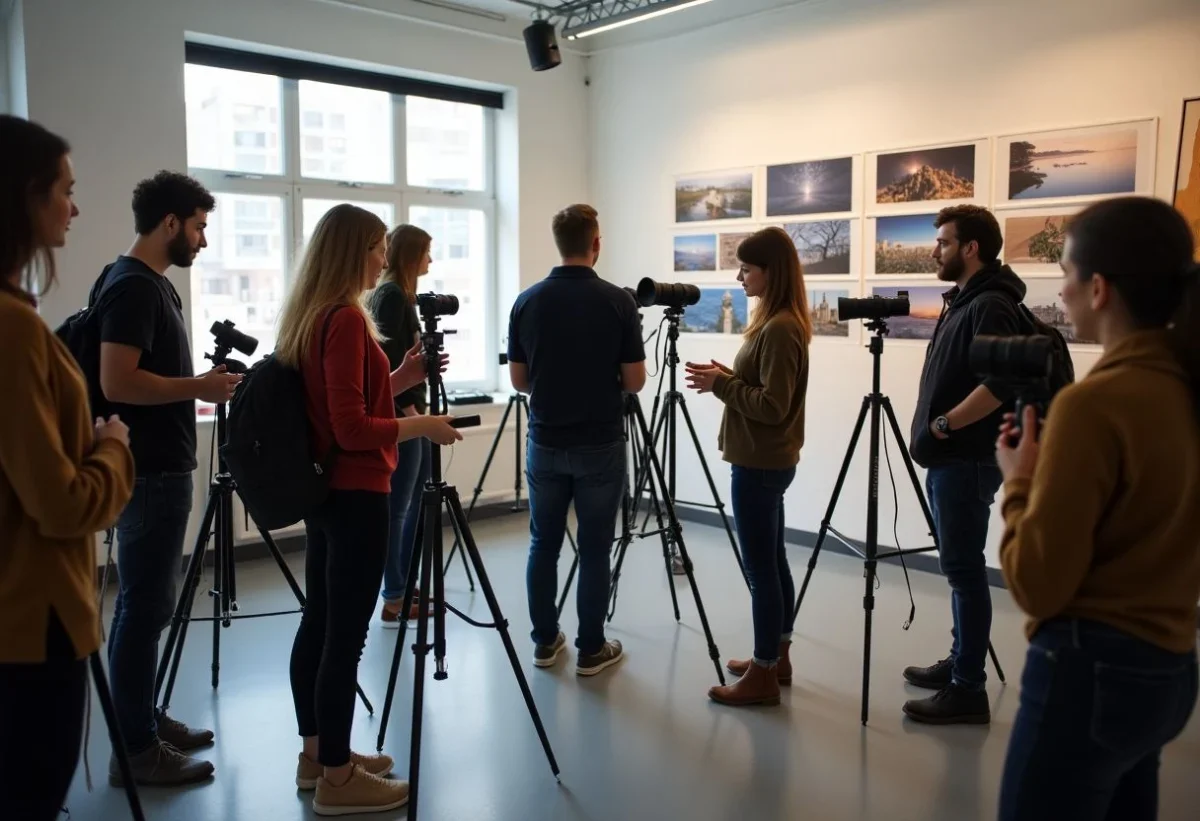
In an era where every moment is immortalized through the lens of a camera, the world of photography stands as a major, captivating, and powerful art form. Whether to capture fleeting moments of everyday life or to create timeless works of art, photography offers a universal visual language. It is in this context that photography schools play a fundamental role in training the photographers of tomorrow. These institutions are much more than mere places of technical learning; they cultivate the soil of creativity, innovation, and the development of a unique artistic vision.
The foundations of training in a photography school
Each photography school offers a unique program that combines theory and practice, supporting students in acquiring the skills necessary to master the art of photography.
- Basic techniques: Students learn to handle the camera, understand exposure, composition, and light. This forms the foundation of their know-how.
- History of photography: An immersion in the evolution of photography allows for an understanding of the artistic and cultural influences that have shaped the medium over time.
- Intensive practice: Practical workshops and projects enable students to implement their theoretical knowledge and develop their own photographic style.
- Critique and analysis: Constructive critiques are an integral part of learning, allowing students to receive feedback on their work and progress.
Specializations offered in a photography school
Choosing a specialization in photography is a significant step in training, helping to define the future professional path of students.
Students can focus on various fields such as fashion photography, where they learn to capture the essence of trends and clothing styles.
Another popular specialization is documentary photography, which trains students to tell stories through powerful images that reflect the realities of the world.
Artistic photography explores the boundaries of creative expression, while commercial photography focuses on the skills required to succeed in the business and advertising world.
Each specialization offers unique challenges and opportunities for personal expression.
Career opportunities after a photography school
Graduates of a photography school benefit from a wide range of varied professional opportunities thanks to their training and enhanced portfolio.
- Freelance photographer: Many choose to work freelance, offering their services for weddings, events, or artistic projects.
- Photographer’s assistant: Working under the supervision of established photographers allows for gaining experience and building a solid professional network.
- Corporate photographer: Companies and advertising agencies seek talents to capture images that enhance their brand.
- Photo editor: In addition to shooting, some graduates turn to editing, where they select and enhance photos for publications.
Choosing the right photography school for you
Choosing a school is essential for developing skills and a career in photography. This involves considering several aspects to find the best option.
When selecting a photography school, it is essential to examine the reputation and experience of the teachers, the available facilities, and the internship opportunities offered. Schools with close ties to the industry can provide considerable advantages in terms of job placement. Considering part-time or online course options for increased flexibility may also be relevant for those wishing to continue their studies while working or taking on other responsibilities.