
A solid soap without plastic packaging, a vegetable oil instead of an industrial cream, a basket of vegetables picked that very morning: a healthy and natural lifestyle is built through precise actions, not vague intentions. Adopting well-being and organic habits requires understanding what these terms truly encompass, especially with the upcoming tightening of European regulations on environmental claims.
Claims “natural” and “organic”: what European regulation changes in 2026
You may have noticed that the words “natural,” “ecological,” or “sustainable” appear on very different products, from shower gel to snack biscuits? Starting September 27, 2026, the European directive on environmental claims prohibits the use of these terms without verifiable proof. In practical terms, a product labeled “natural” must justify this claim with controllable data.
This evolution changes the game for consumers. It forces brands to document every green promise, making it easier to sort products on the shelves. To navigate this landscape now, it is reliable to rely on official certifications: the AB label for food, Cosmos Organic or Ecocert for cosmetics. These standards impose strict specifications on composition, manufacturing processes, and traceability.
Specialized resources like bien-et-bio.info detail these distinctions between labels and help differentiate between a genuine organic commitment and a mere marketing argument.

Organic and local food: prioritize short circuits for health
The organic food market rebounded in 2025, after several years of decline since 2022. Sales are increasing again in volume and price, and the share of organic in household food spending has slightly risen to 5.8%, according to the 2025 report from the Agency Bio.
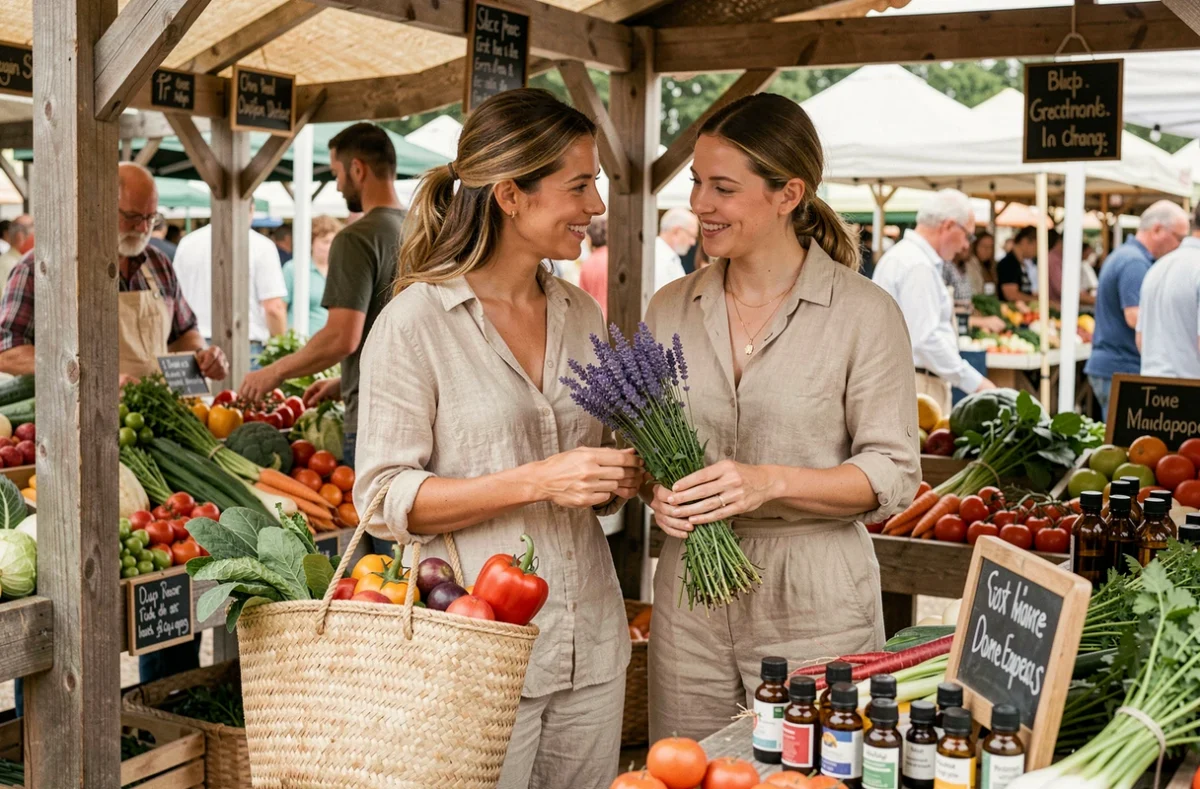
This rebound is driven by specialized organic stores and local circuits (direct sales, AMAP, farmers’ markets), while large supermarkets are seeing only moderate growth. Why this discrepancy? Because short circuits guarantee freshness and traceability that large retailers struggle to replicate for fresh products.
Three guidelines for structuring organic purchases
- Choosing seasonal fruits and vegetables reduces reliance on heated greenhouses and long-distance imports, improving the environmental impact of the basket.
- Read the ingredient list before the logo: a processed product labeled organic may contain sugar, salt, or fats in significant amounts. The label guarantees agricultural origin, not nutritional balance.
- Alternate between animal and plant proteins (lentils, chickpeas, tofu) to diversify intake without straining the budget. Organic legumes remain among the most accessible products in specialized stores.
Eating healthy is not just about putting a label on every food item. The regularity of meals, the variety of plates, and the limitation of ultra-processed products are as important as the method of cultivation.
Natural cosmetics and organic care: read the labels above all
Body care follows the same logic as food: a “natural” cosmetic is not necessarily certified organic. The term “natural” on a bottle does not legally commit to anything until the European directive of September 2026 is implemented. Until that date, only a recognized label (Cosmos Organic, Natrue, Ecocert) guarantees a minimal percentage of natural origin ingredients and the absence of certain controversial substances.
Some simple actions can help transition to a healthier beauty routine. Replacing an industrial makeup remover with a vegetable oil (jojoba, sweet almond) nourishes the skin without harsh surfactants. Swapping plastic bottled shower gel for cold saponified soap reduces packaging and eliminates synthetic preservatives.
Essential oils: a use that requires precision
Lavender, tea tree, eucalyptus radiata: organic essential oils are often used for relaxation or indoor air purification. Their effectiveness depends on adhering to a few basic rules.
- Never apply pure essential oil to the skin without diluting it in a vegetable oil (a few drops are sufficient).
- Check the “chemotype” label on the bottle, which specifies the dominant active molecule and ensures appropriate use.
- Avoid prolonged diffusion in a closed room, especially in the presence of children or pets.
Energy and recovery: the often-overlooked foundation of natural well-being
Nutrition and care capture attention, but sleep and stress management determine the body’s ability to benefit from these choices. A night that is too short or fragmented negates some of the benefits of a balanced diet by disrupting hormonal regulation and muscle recovery.
Social isolation, particularly for remote workers, can weigh on mental well-being. This directly concerns those looking to adopt a healthy lifestyle from home: regular movement and maintaining social interactions are part of the well-being foundation, just as much as what is on the plate.
Some concrete practices help stabilize energy levels daily. Exposing the skin to natural light within the first hour after waking resets the circadian rhythm. Limiting screens an hour before bedtime promotes melatonin production. Walking for about thirty minutes a day, even at low intensity, is enough to significantly reduce perceived chronic fatigue.
A healthy and natural lifestyle is not a fixed program. It adjusts to each season, each budget or time constraint. What matters is the coherence between what we eat, what we apply to our skin, and how we respect our biological rhythms. Labels evolve, regulations tighten, and careful reading of labels remains the most cost-effective action to move in the right direction.