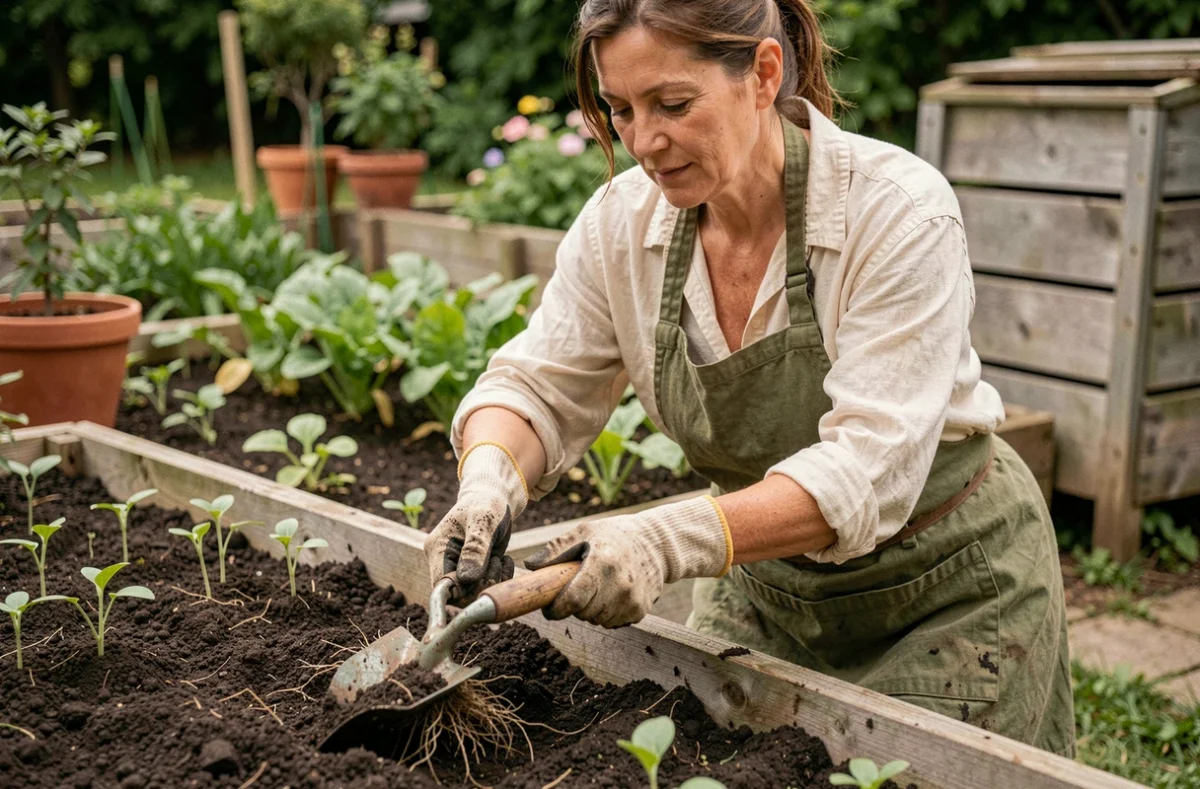
A bio vegetable garden is based on a fundamental principle: working with the life of the soil rather than against it. The grelinette, a tool with tines designed to loosen the earth without turning it over, aerates the surface layers while leaving intact the organisms that ensure natural fertility. Combined with a few simple methods (mulching, composting, rotations), it is sufficient to maintain a productive soil without resorting to synthetic products.
Biocontrol and bio vegetable gardens: a regulatory distinction to know
Since 2019, individuals in France can no longer buy or use most synthetic phytopharmaceutical products. This ban logically pushes towards natural practices, but it also creates frequent confusion between two concepts that do not overlap: biocontrol and organic farming.
A product classified as biocontrol is not automatically authorized in organic farming. The two statuses fall under different lists and criteria. Before using a product in the garden, even if sold as “natural,” checking its compliance with both references avoids unpleasant surprises.
For a truly organic vegetable garden, the simplest approach is to do without any commercial inputs and rely on the soil’s fertility. This is precisely where the grelinette comes into play: by aerating the soil without disturbing it, it promotes biological activity that makes treatments unnecessary. The site grelinette-warrior.com details the different models suitable for each type of terrain and surface.
Grelinette and soil structure: what happens beneath the surface
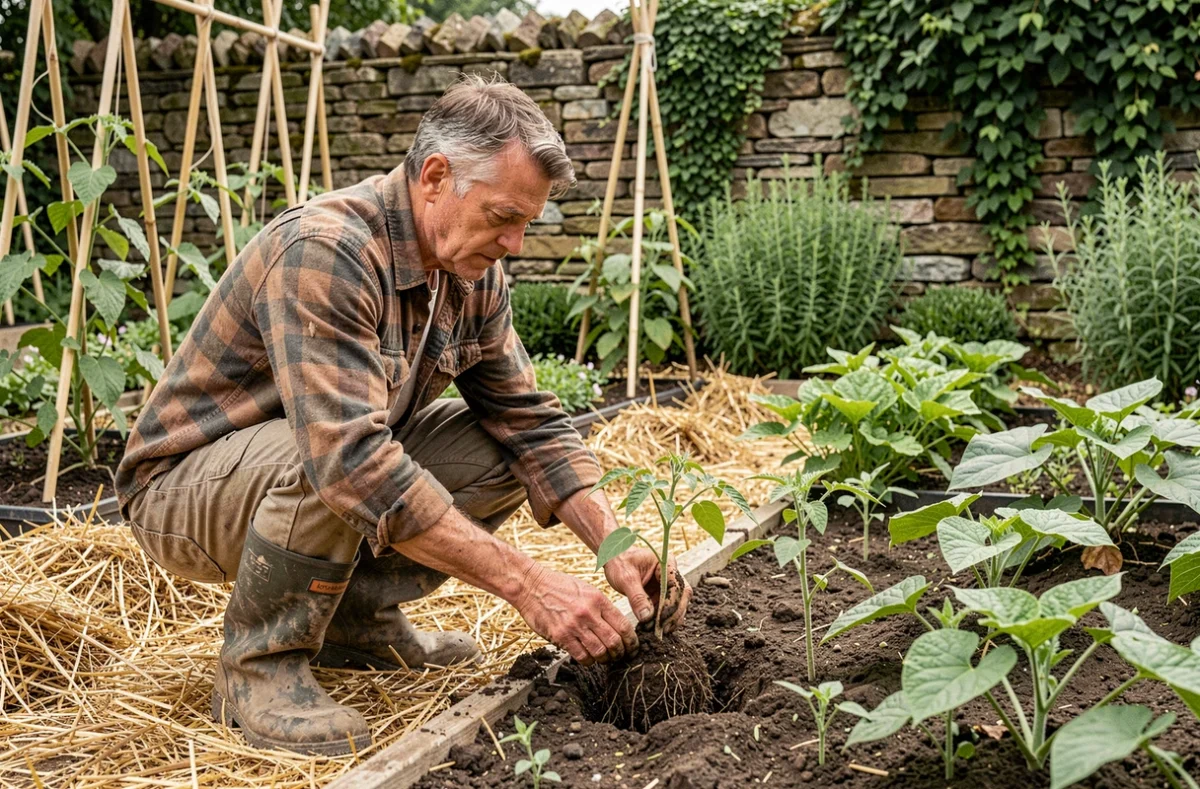
Traditional digging turns over the layers of soil. Aerobic microorganisms, active on the surface, end up buried deep. Anaerobic organisms rise to the surface. Both populations are disturbed, and the crumbly structure of the soil, built by earthworms and mycorrhizal fungi, is destroyed.
The grelinette works differently. Its tines penetrate vertically, then a lever action backward lifts and cracks the earth without reversing the layers. Each layer of soil retains its fauna and function. The visible result: aerated soil, easy to work with a claw or rake, which absorbs rainwater better.
When to use the grelinette
Two passes per year are sufficient in most situations. The first, at the end of winter, loosens soil compacted by rain and frost. The second, at the end of the season, prepares the beds that will receive winter mulching or green manure.
On very clayey soil, waiting for the earth to dry out (neither sticky nor dry in blocks) conditions the effectiveness of the action. Working on waterlogged soil essentially leads to additional compaction, even with a respectful tool.
Mulching and surface composting in the organic vegetable garden
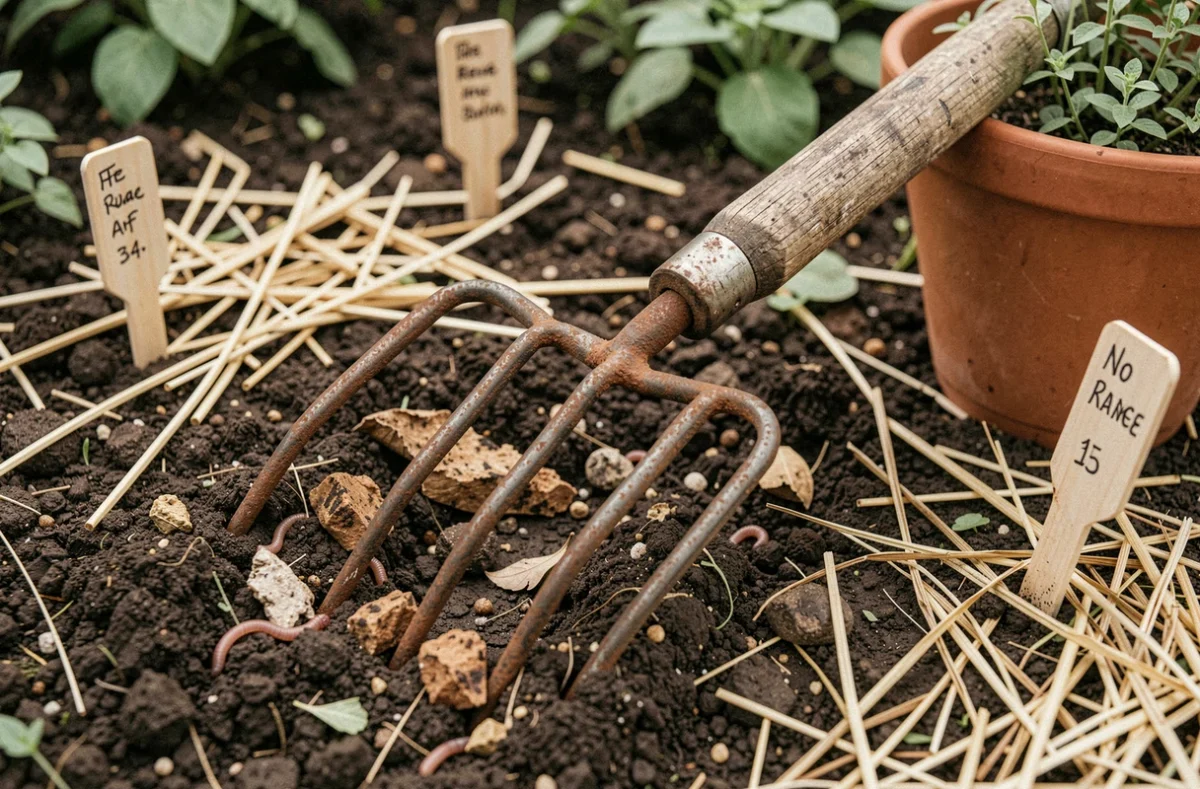
Aerating the soil is not enough if it is left bare afterward. Soil exposed to sun and rain crusts over, loses its organic matter, and sees its earthworm populations decrease. Natural mulching protects the surface and nourishes the soil as it gradually decomposes.
Surface composting involves directly depositing organic materials (dried grass clippings, fallen leaves, peels) onto the growing beds without going through a compost bin. This technique reduces handling and continuously feeds the soil. Combined with a prior pass of the grelinette, it accelerates the penetration of organic matter thanks to the cracks created in the soil.
What materials to use for mulching
- Dead leaves make a free and balanced mulch, to be spread in a sufficiently dense layer to block the emergence of weeds while allowing water to infiltrate.
- Organic cereal straw, available at garden centers or from local farmers, decomposes slowly and is suitable for summer crops like tomatoes or zucchinis.
- Grass clippings, spread in thin layers and dried beforehand, provide nitrogen quickly. Spread in a thick and wet layer, they ferment and become harmful.
- Wood chip mulch (BRF) stimulates soil fungi and improves the structure of heavy soils in the long term.
Crop rotation and associations: avoiding common mistakes
An organic vegetable garden that returns to the same planting plan each year eventually depletes certain nutrients in the soil and encourages the establishment of specific pests. Crop rotation over three or four years breaks these cycles without chemical intervention.
The principle is to group vegetables by botanical family (Solanaceae, Cucurbitaceae, Fabaceae, Allium) and to rotate each group from one bed to another each season. Fabaceae (beans, peas, broad beans) fix atmospheric nitrogen in the soil: planting them before a nutrient-hungry crop like tomatoes or cabbage reduces the need for fertilization.
Useful associations in the vegetable garden
- Carrots and leeks protect each other from their respective flies thanks to their cross odors.
- Basil planted at the foot of tomatoes improves pollination and repels certain aphids.
- Nasturtiums, sown at the edges, attract aphids away from the main crops and serve as trap plants.
These associations do not replace soil fertility, but they complement the foundational work done by the grelinette, mulching, and composting. A living and well-structured soil remains the first protection against pests.
Adapting soil work throughout the seasons
The grelinette fits into a simple seasonal calendar. At the end of autumn, after the last harvests, a light pass followed by thick mulching puts the soil to rest. The underground fauna works all winter under this protective cover.
In spring, remove the mulching, pass the grelinette on the relevant beds, then refine with a claw before sowing. On soil maintained this way for several seasons, the earth loosens almost effortlessly because biological life has already done most of the structuring work.
Using green manures (mustard, phacelia, rye) between crops occupies the soil, limits weeds, and adds organic matter for shallow incorporation. A simple pass with the grelinette at the time of incorporation is sufficient.
A productive organic vegetable garden does not rely on a miracle tool or a single technique. It is the coherent sequence of simple actions (aeration without turning, permanent soil coverage, thoughtful rotations) that builds, season after season, a fertile soil capable of nourishing healthy vegetables without chemical support.